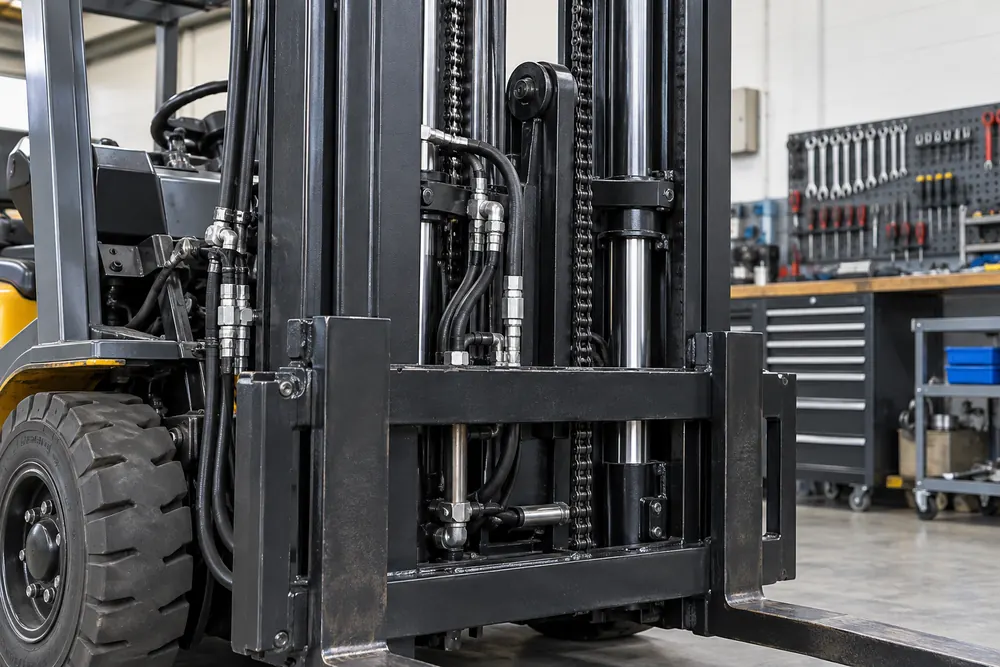
Make The Truck Safe First
Stop using a forklift if a fault affects safe lifting, braking, steering or load control. Lower the forks where this can be done safely, secure the machine and follow your site's isolation procedure. Keep people away from a raised or unstable load and seek competent assistance rather than attempting an improvised recovery.
Do not bypass an interlock, ignore a hydraulic leak or continue operating because a truck still moves. Make the isolation status clear to the next shift. If the truck blocks a working route, manage the area and agree a safe recovery method before moving it.
Send Useful Fault Information
Provide the make, model, serial number, power type and hour reading. Describe when the fault started and whether it happens constantly or only under a particular load. Photographs of accessible identification plates and dashboard messages can help, provided they are taken without entering a danger area.
Explain any recent impacts, attachment changes, servicing or charging problems. Tell us whether the truck starts, moves and lowers normally, without testing unsafe functions for the sake of an enquiry. Identify the site postcode, access restrictions and whether the machine can be reached safely by an engineer.
Diagnosis Before Parts Replacement
A warning code identifies a starting point for investigation rather than proving which component needs replacement. Electrical supply faults, damaged wiring, hydraulic problems and mechanical wear can produce similar symptoms. Diagnosis should connect the reported fault with checks suitable for that model.
Ask how attendance and diagnostic time are charged. The engineer may need model-specific tools, technical information or further testing before providing a repair scope. A clear diagnosis helps avoid replacing parts without addressing the underlying problem. Where several faults exist, ask which affect safety and which affect performance or reliability.
Agree The Repair Process
First, provide the fault description and truck identification. Next, establish whether on-site assessment is suitable or workshop recovery is needed. Confirm access, isolation and any lifting or handling arrangements required to reach the damaged component.
After diagnosis, request a written repair scope with parts availability and costs. Authorise the agreed work before replacement parts are ordered. Following repair, obtain a record of work completed, any remaining defects and the checks carried out. Do not assume a repaired truck is ready for every task until restrictions and return-to-service advice have been reviewed.
Repairs And Your Legal Duties
PUWER places duties on those providing and controlling work equipment, including maintaining it in safe working condition. LOLER also applies to forklift lifting functions. Repairs do not replace any examination that is due, and an examination report does not remove the need to fix a known defect.
Ask a competent person whether damage, a major repair or exceptional circumstances require further examination before use. HSE guidance explains that circumstances affecting safety can trigger examination outside the normal schedule. Keep repair records with the truck's examination and maintenance documents so future decisions use the full history.
What Changes Repair Cost And Timing
Cost depends on the fault, access to components, diagnostic work, parts and whether the truck must leave site. Older or less common models may have different parts availability. A hydraulic hose replacement and a complex electrical investigation cannot sensibly be priced as the same job.
Ask for labour, travel, recovery and parts to be identified separately. Confirm whether the proposed parts are new, reconditioned or another agreed option. If operations cannot wait for repair, discuss temporary hire and check suitability before booking it. Attendance, completion dates and replacement equipment remain subject to confirmation rather than a blanket response promise.
Forklift Repair Questions
Can A Faulty Forklift Stay In Use?
A faulty forklift should be taken out of use when the defect could affect safety. Secure it through your workplace procedure and obtain competent advice. Continuing to operate with braking, steering or lifting faults can create further danger. Describe symptoms in the enquiry without repeating unsafe tests or attempting repairs beyond your competence.
Can Forklift Repairs Be Done On Site?
Forklift repairs can sometimes be completed on site when access, isolation and working conditions are suitable. More involved work may need workshop facilities or recovery. Send the truck identity, fault description and site restrictions first. The repair route and likely costs can then be assessed before attendance or transport is arranged.
Read The Safety Guidance
Plan your work using HSE lift truck guidance, PUWER guidance and HSE thorough examination guidance. For training, read HSE operator training advice. Examination buyers can also consult the CFTS examination questions.