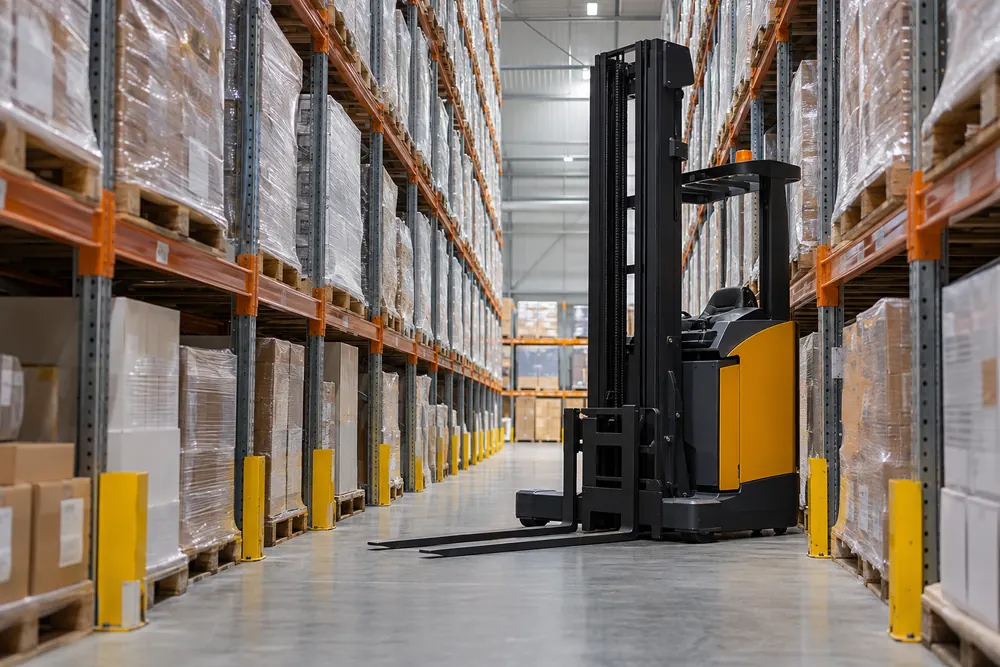
Check Aisles With Real Pallets
Aisle suitability depends on truck dimensions, pallet length, turning geometry and the working clearance needed. Measure between the actual rack faces and identify any columns, guards or obstructions. Give the supplier your pallet orientation and dimensions rather than just a nominal aisle width.
Confirm whether the truck will pick from floor positions and how the support legs interact with the pallet and racking. Some storage layouts or load types require a different configuration. A measured site sketch and photographs can make the assessment more useful than choosing from a brochure photograph.
Verify Capacity At Rack Height
Reach trucks handle loads at height, so residual capacity is an important part of selection. The rated capacity at a particular height and load centre may be lower than the truck's headline figure. Include pallet weight, goods and any attachment when specifying the load.
Send your highest storage level, load dimensions and the heaviest lift required there. Check overhead services, beams and sprinkler positions as part of the operating assessment. Ask for the capacity information for the actual mast configuration offered. Do not rely on the capacity of a different truck already on site.
Assess Floors And Transfer Routes
Many reach truck applications depend on firm, level warehouse floors. Gaps, uneven joints and abrupt transitions can affect operation. Door thresholds and loading bridges need assessment, especially if the truck must move between buildings or cross a yard.
Explain any outdoor travel before booking. A truck intended for indoor racking should not be assumed suitable for rough or wet external surfaces. Identify gradients and the path from the delivery point to the working area. If a counterbalance truck is also needed for unloading, describe both tasks so each machine can be specified appropriately.
Plan Power And Operator Familiarisation
Match battery capacity and charging arrangements to the number of shifts and actual duty cycle. Confirm the charger supplied, electrical connection and charging location. Follow manufacturer instructions for charging and handling batteries, with suitable workplace controls for the equipment involved.
HSE guidance separates basic training, specific job training and familiarisation training. A counterbalance operator should not be assumed competent on a reach truck without the relevant training and assessment. Arrange familiarisation with the actual controls, visibility and operating space. Confirm authorisation and supervision before the truck enters normal warehouse traffic.
Arrange Hire Step By Step
First, send the site postcode, dates and expected working hours. Next, provide load data, rack heights and aisle measurements. Clarify floor condition, access, charging and any restrictions on delivery. These details support a specification that matches the storage task.
Review the proposed truck, capacity chart and written hire terms. Confirm who handles servicing, examination arrangements and defects during the hire. At delivery, check equipment condition and documents, then complete familiarisation and the site operating assessment. Keep the return date under review if the truck is supporting a warehouse change or a temporary storage project.
Understand Costs And Safe Use
Reach truck hire costs can change with mast height, residual capacity, battery provision, hire length and transport requirements. Accessories or specialist applications may affect availability. Ask for excess hours, damage terms and any charging equipment to be included clearly in the quotation.
PUWER applies to the safe provision and use of the truck, while LOLER applies to its lifting functions. Confirm the relevant examination paperwork and maintain the daily checking routine. Keep pedestrians out of the working aisle and follow your warehouse traffic arrangements. Contact us with measured details if you need help defining the next hire request.
Reach Truck Hire Questions
Can A Reach Truck Work Outside?
Reach truck outdoor use depends on the actual model, surface and manufacturer instructions. Many warehouse applications require firm, level floors and are unsuitable for rough yards. Describe any outdoor transfer route, thresholds and gradients before hire. A different machine may be needed for unloading or external travel even when a reach truck suits the racking.
What Aisle Width Does A Reach Truck Need?
Reach truck aisle width depends on the truck model, pallet dimensions and handling geometry. Measure the working aisle and identify guards, columns and other obstructions. Provide pallet orientation and the maximum load dimensions with your enquiry. Ask the supplier to check the proposed truck against those measurements before you agree the hire.
Read The Safety Guidance
Plan your work using HSE lift truck guidance, PUWER guidance and HSE thorough examination guidance. For training, read HSE operator training advice. Examination buyers can also consult the CFTS examination questions.